About us
Baking with heart and tradition
At Damasco Bakery every recipe tells a story: rooted in tradition, perfected with passion and baked with love. We combine proven techniques with high-quality ingredients.
We bring back the quality and taste of our ancestors, made by their grandchildren, with modern techniques and more than 25 years of experience.
25+years of experience
Our mission
Our product is not just something we make: it is who we are. We make every piece with love, patience and care.
Our vision
To be the source of authentic Arabic sweets in Europe, while keeping the original taste.
Our values
Quality, transparency and the highest hygiene standards, with respect for traditional recipes.
In the press
Damasco Bakery in Dordrecht is Europe’s largest bakery focused on Middle Eastern sweets.
Why we are called Damasco
Our name comes from the city our recipes come from.
The name
Damasco is the Italian, Spanish and Portuguese name for Damascus. In Arabic the city is called Dimashq, and in everyday speech often simply ash-Sham. The name already appears in Egyptian sources from the fifteenth century BC. No one knows for certain what it originally meant.
A city thousands of years old
UNESCO describes Damascus as one of the oldest continuously inhabited cities in the world, founded in the third millennium BC. Aramaeans, Romans and Byzantines all left their mark on it. From 661 to 750 it was the capital of the empire of the Umayyads, who built the Great Mosque there. The old city has been on the World Heritage List since 1979.
A city on the caravan routes
Damascus lies in a green oasis on the Barada river, at the foot of the Anti-Lebanon mountains. Around it lies the Ghouta, where grain, fruit and nuts have been grown since ancient times. Caravans from every direction met here. In Ottoman times, the great pilgrim caravan to Mecca set out from Damascus every year.
Not everything named after the city was invented there. But the name stuck.
Words named after Damascus
Say damask and you are naming Damascus. The damask rose and the damson plum carry the city's name too. Smiths in Damascus made swords with a wavy pattern; the steel itself probably came from India.
The sweet souk
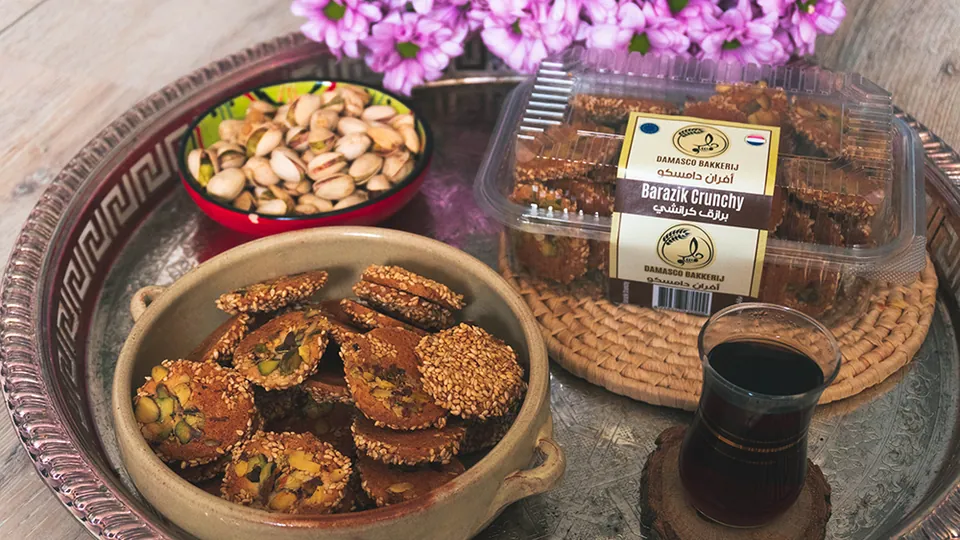
South of the Umayyad Mosque runs the Buzuriyah souk, a covered street of about a hundred and fifty metres with spices, dried fruit, soap and sweets. Barazek, the thin sesame cookie, is regarded throughout the region as Damascene. A description from as early as 1898 tells of thin barazek with sesame and grape molasses being sold in Damascus.
Maamoul and the feast days
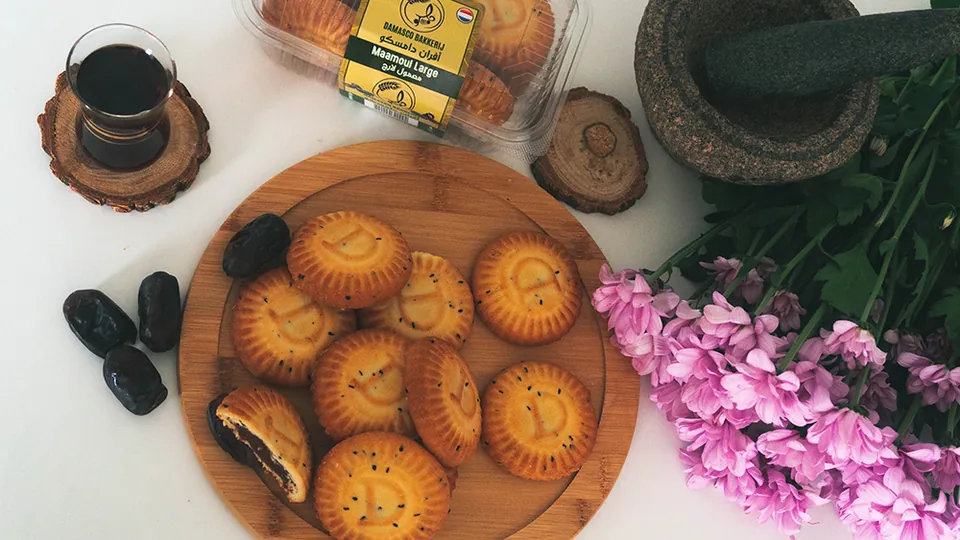
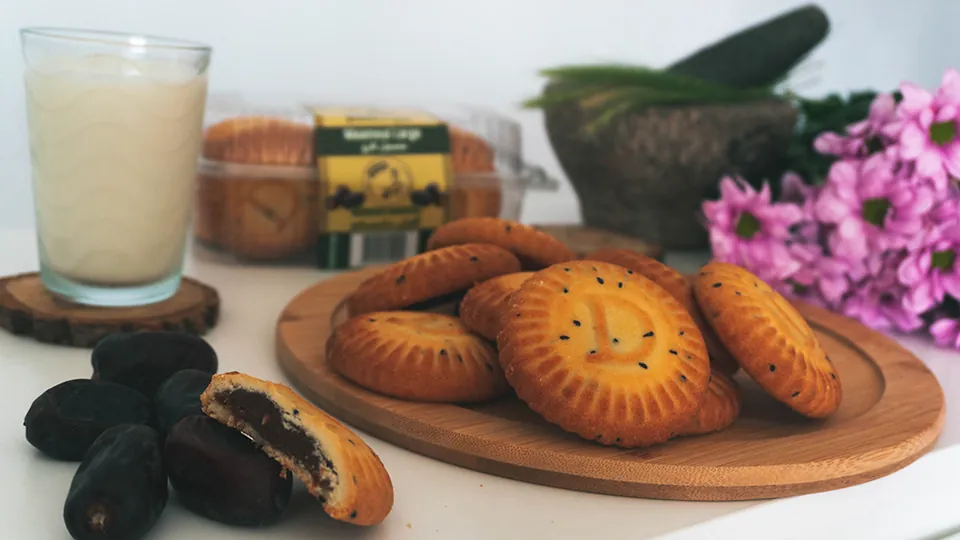
In Syria and neighbouring countries, maamoul is part of the celebrations: at Eid al-Fitr and Eid al-Adha, and at Easter. The dough is filled, often with dates, and pressed into a wooden mould that leaves a pattern on it. Families bake large amounts, hand out plates to their neighbours and serve maamoul with coffee to their guests.
From Damascus to Dordrecht
- 15th century BCThe city's name appears in Egyptian sources: the oldest written trace.
- 1st millennium BCDamascus is the capital of the Aramaeans.
- 661–750Capital of the Umayyad empire. The Great Mosque is built.
- 1516–1918Ottoman period. Every year the pilgrim caravan sets out from Damascus.
- 1979The old city becomes a UNESCO World Heritage Site.
- 2018Damasco starts in Dordrecht, with a single oven.
- 2025From one oven to €1 million in revenue. Damasco is sold in shops in five countries: the Netherlands, Belgium, Germany, France and Luxembourg.
Want to sell Damasco products?
We are happy to work with shops and distributors. Get in touch to discuss the options.